Cyber Vault
Security learning with structure, ethics, and hands-on practice.
A focused space for TryHackMe progress, Linux, networking, web security, and safe lab practice.
Cyber Command Center
Current learning signal at a glance.
A compact dashboard for the areas I am actively strengthening through labs, tooling, and web-security practice.
Cyber Focus Compass
Four directions guiding the page.
Authorized Practice
Security work stays inside allowed environments.
Every lab signal shown here is framed around legal practice, careful documentation, and responsible communication.
TryHackMe Mission Board
Security progress cards.
Real learning signals from TryHackMe, organized like mission files instead of plain images.

Mission File 01
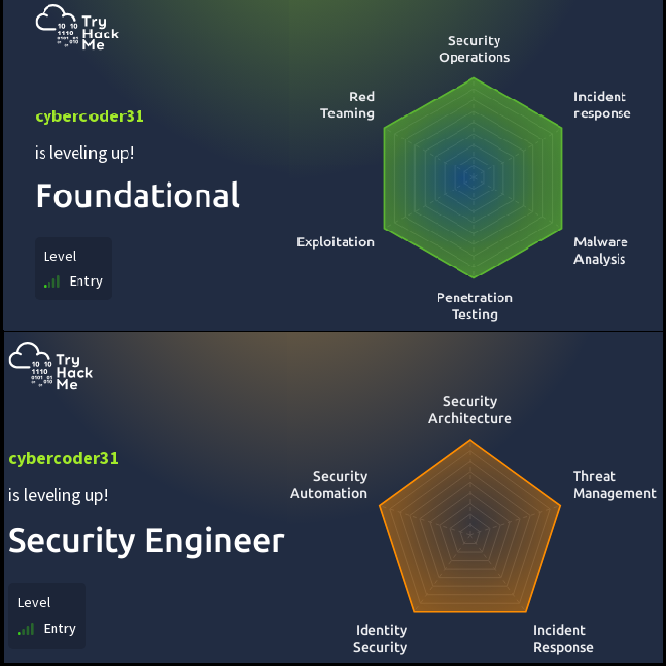
Foundational + Security Engineer
- Operations, incident response, and security architecture exposure
- Red-team thinking, exploitation concepts, identity security, and automation

Mission File 02
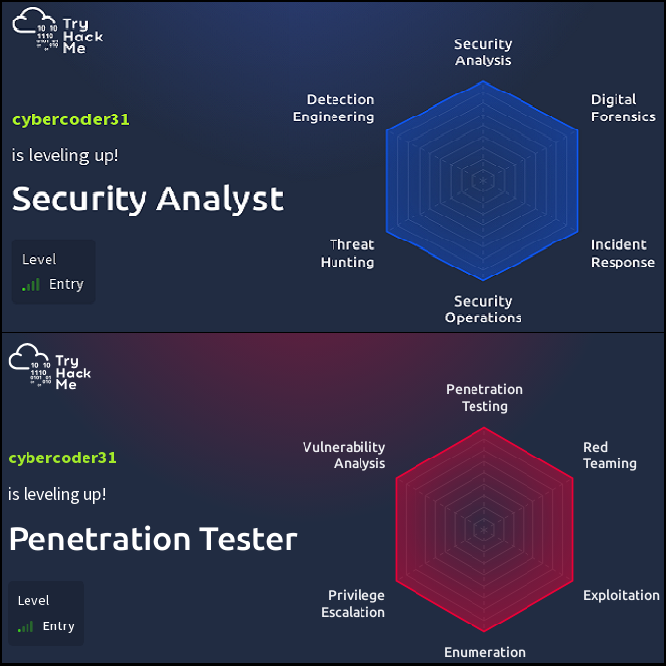
Security Analyst + Penetration Tester
- Security analysis, forensics, threat hunting, and operations context
- Enumeration, vulnerability analysis, red teaming, and responsible reporting
abhigyan@vault:~$ current_focus
linux + networking + web-security + tryhackme
abhigyan@vault:~$ timeline --learning
pre-security -> security-101 -> analyst-track -> penetration-testing-track
abhigyan@vault:~$ ethics
practice only in authorized labs and document responsibly
Security Habits
Learning Path
Where the cyber journey is going.
Pre Security
Networking fundamentals, web concepts, Linux practice, and security vocabulary.
Cyber Security 101
Core concepts, defensive thinking, threat awareness, and security operations context.
Security Analyst
Threat hunting, incident response, log thinking, and security operations fundamentals.
Penetration Tester
Enumeration, vulnerability analysis, exploitation concepts, and responsible reporting.
Security Engineer
Hardening, identity security, architecture concepts, and automation-minded security.
Threat Map Skill View
Practical areas I am building.
Filesystem, permissions, users, processes, packages, and command discipline.
IP, DNS, ports, HTTP, protocols, and how systems communicate.
Authentication, input handling, XSS awareness, SQLi awareness, and safer forms.
Observation, service discovery, scope control, and careful documentation.
Understanding symptoms, risk, validation, and responsible reporting.
Signals, logs, timelines, root-cause thinking, and response discipline.
Cyber Learning Heatmap
How learning areas connect to practice.
The stronger cells show where I am spending the most hands-on time right now.
Toolbelt
Cyber toolkit, kept practical.
These tools and workflows help me build hands-on comfort while keeping the learning grounded and responsible.
Cyber + Full Stack Bridge
How security thinking improves my web work.
This is the most useful overlap for my portfolio: building web projects with safer defaults and clearer user flows.
Authentication UX
Clear login states, recovery paths, and safer error messages.
Input Validation
Cleaner forms, tighter constraints, and better data handling.
Access Control
Role-aware interfaces and least-privilege thinking.
Readable Logs
Useful activity records without leaking sensitive details.
Mini SOC Dashboard
Analyst desk concept.
Lab Report Preview
Safe summary format.
Security Mindset
Principles I want visible on the page.
Scope first
Understand what is allowed before touching a target.
Verify before assuming
Use evidence, not guesses, when reading a signal.
Least privilege
Prefer smaller access, safer defaults, and cleaner boundaries.
Report responsibly
Write findings in a way that helps people fix issues.